
Nigerian Government Halts New Federal Tertiary Institutions for Seven Years, Citing Quality Concerns
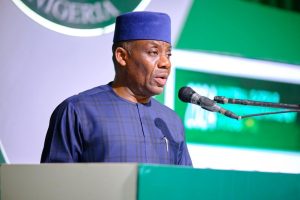
The Minister of Education, Tunji Alausa
By Admin, August 14, 2025
The Nigerian Government has approved a seven-year moratorium on the establishment of new federal universities, polytechnics, and colleges of education.
The decision, which was made during Wednesday’s Federal Executive Council (FEC) meeting, aims to address the deteriorating quality of education caused by the rapid proliferation of under-utilized institutions in the country.
Minister of Education, Dr. Tunji Alausa, said that the country’s primary challenge is no longer a lack of access to higher education, but rather the inefficient duplication and poor condition of existing institutions.
He highlighted a number of issues, including:
”Under-enrollment: Many existing institutions operate well below capacity. Dr. Alausa who cited statistics from the previous year, note that 199 universities received fewer than 100 applications, with 34 recording zero applications. Similarly, many polytechnics and colleges of education are struggling with very low enrollment figures.
Wasted Resources: The government is spending billions on institutions with minimal student populations. For instance, one northern university has 1,200 staff members serving fewer than 800 students, an example of gross inefficiency.
Declining Quality: The unchecked establishment of new, poorly funded institutions risks producing ill-prepared graduates, which could erode the value of Nigerian degrees on the global stage and worsen unemployment.
The Minister explained that the seven-year freeze will allow the government to redirect resources to upgrade facilities, expand carrying capacity, and hire qualified staff for the nation’s 72 federal universities, 42 federal polytechnics, and 28 federal colleges of education.” he highlighted.
Nine New Private Universities Approved
Despite the moratorium, the FEC approved the creation of nine new private universities.
According Dr. Alausa” these approvals were for applications that had been pending for up to six years and had already undergone a rigorous evaluation by the National Universities Commission (NUC).”
He stressed that the government has since implemented stricter guidelines for new private institutions and has deactivated over 350 dormant applications.
The moratorium also extends to new private polytechnics and colleges of education, reflecting a comprehensive strategy to curb under-enrollment across all tertiary sectors.
In a statement, Dr. Alausa described the policy as a “reset button” for Nigeria’s tertiary education system, shifting the government’s focus from quantity to quality.
He noted that the Academic Staff Union of Universities (ASUU) has long condemned the “reckless and excessive” establishment of new institutions, which has led to a funding deficit and a decline in academic standards.
The government’s new policy is seen as a direct response to these concerns, aiming to ensure that Nigerian graduates remain competitive and respected globally.