
Customs Revenue Soars as Adeniyi Drives Major Reforms
By Admin, Lagos
The Nigeria Customs Service (NCS) has undergone major reforms in the past three years, expanding its role beyond revenue collection to include trade facilitation, intelligence gathering, border security, data management and environmental protection.
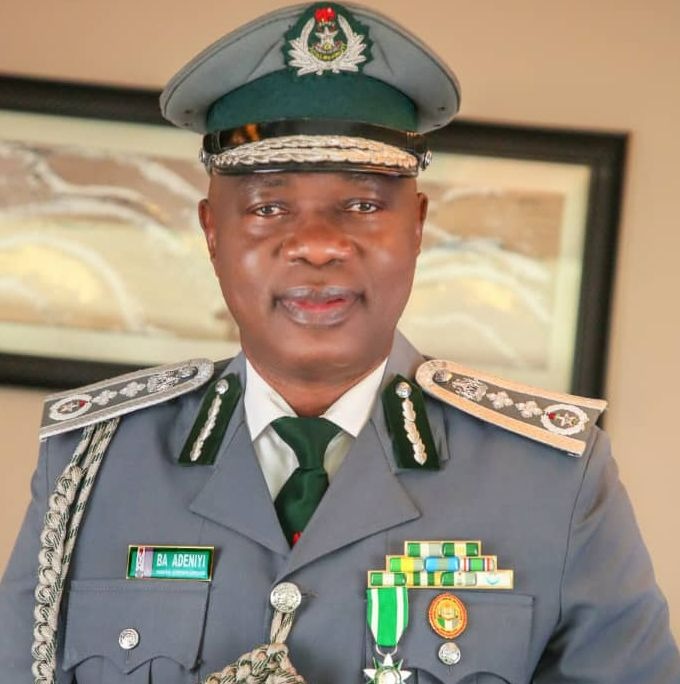
The transformation, driven by the Comptroller-General of Customs, Bashir Adewale Adeniyi, has coincided with a sharp rise in revenue and increased use of technology and intelligence-led enforcement.
The NCS collected ₦3.21 trillion in 2023, ₦6.105 trillion in 2024 and ₦7.27 trillion in 2025.
The Service has ₦11 trillion revenue target for 2026 and had already generated ₦4.043 trillion between January and June.
According to the NCS, the increase has been driven largely by automation, improved compliance, intelligence-led enforcement and reduced leakages.
Technology platforms, including the Unified Customs Management System and B’Odogwu, have been deployed to reduce human interference and improve the efficiency of customs processes.
Speakin with newsmen, the Comptroller-General of Customs, Bashir Adewale Adeniyi said the reforms were designed to increase government revenue without creating unnecessary barriers for legitimate businesses.
“We removed human discretion, deployed technology, and built trust with compliant traders. When you do that, revenue will grow exponentially without hurting business,” he said.
The Service has also introduced measures aimed at making Nigerian ports more efficient, including Time Release Studies, Advanced Ruling, 24-hour operations at major ports, the Authorised Economic Operator programme and faster dispute resolution.
Customs also increased engagement with the Nigerian Ports Authority, shipping companies and terminal operators to reduce delays and improve cargo clearance.
Accordin tto Adeniyi, real-time data and risk-management systems are being used to monitor cargo, revenue and seizures across commands.
Rather than subjecting every shipment to the same level of scrutiny, the system profiles cargo directs greater attention to high-risk consignments while allowing compliant traders to enjoy faster clearance.
“The data generated by Customs supports national economic planning and can provide valuable information for institutions such as the National Bureau of Statistics, Central Bank of Nigeria and Federal Ministry of Finance” Adeniyi stated.
The NCS has also strengthened its fight against smuggling and illicit financial flows through intelligence-led operations and collaboration with agencies including the Nigerian Army, Navy, DSS, EFCC and NFIU.
The Service says it has intercepted consignments involving arms, foreign rice, used vehicles and petroleum products, while also increasing efforts to detect trade-related financial crimes such as undervaluation, false declarations and trade mis-invoicing.
According tto NCS, the Currency Declaration System and other monitoring mechanisms are also being used to identify suspicious cross-border movement of cash and other illicit financial activities.
Th Service maintained that Nigeria’s borders must not become channels for smuggling, money laundering or the financing of insecurity.
Environmental protection has also become part of the NCS’s expanding responsibilities as the Service has stepped up efforts against wildlife trafficking, particularly the movement of pangolin scales, elephant ivory and other endangered species through Nigerian airports and seaports.
Th NCS said it’s working with environmental agencies, NGOs and international partners, saying that Customs has recorded seizures of wildlife products, trained officers in wildlife identification and deployed detection dogs.
Accordin tto Customs Boss, the efforts are aimed not only at protecting Nigeria’s biodiversity but also at strengthening the country’s compliance with international wildlife protection obligations.
He said there have been increased training for Customs officers in information technology, intelligence, investigation and more engagement with traders and other stakeholders in an effort to improve cooperation and encourage voluntary compliance.
Despite the reported progress, Adeniyi recounted some challenges, including poor access roads around ports, the need to further improve export facilitation and the pressure of meeting the ₦11 trillion revenue target for 2026.
He however harped on the need to ensure that the reforms become institutionalised and continue beyond individual leadership
Nigerian President, Bola Ahmed Tinubu also commended the changes within the Service, particularly Adeniyi’s unanimous re-election as Chairperson of the World Customs Organisation Council, saying it reflects Nigeria’s growing role in global customs administration.