
Nigerian Government Moves to Ease Aviation Crisis as Keyamo Secures Fresh Resolutions
By Admin, Lagos
The Nigerian Government has taken steps to ease recent tensions in the country’s aviation industry following disputes involving airline operators, aviation agencies and workers’ unions.
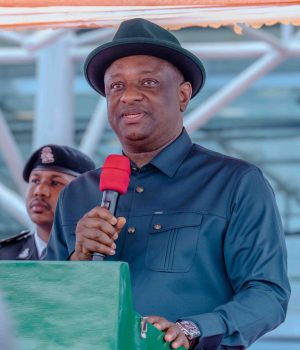
Minister of Aviation and Aerospace Development, Festus Keyamo, convened an emergency stakeholders’ meeting on Thursday, August 13, 2026, as part of efforts to resolve outstanding issues and prevent further disruption to flight operations.
The meeting followed earlier discussions between the Government, aviation sector unions and the Airline Operators of Nigeria (AON), after the unions temporarily suspended industrial action on Tuesday, August 11.
According to the Permanent Secretary of the Federal Ministry of Aviation and Aerospace Development, Mahmud Adam Kambari, the meeting produced a number of resolutions aimed at addressing the disputes and strengthening industrial harmony in the sector.
One of the key decisions requires the Nigeria Civil Aviation Authority (NCAA) and heads of other aviation agencies to obtain payment schedules from airlines with outstanding financial obligations.
The repayment schedules are expected to provide realistic timelines that take into account the financial pressures facing airlines, including their operational costs and the prevailing economic situation.
The resolution is intended to balance the financial obligations of airlines with the need for aviation agencies to recover outstanding payments without placing additional strain on operators.
Directors of Finance and Accounts of the various aviation agencies are also expected to meet with individual airlines within one week to negotiate and agree on practical repayment arrangements.
The move is expected to help address some of the financial disagreements that have contributed to tensions between airlines, aviation agencies and workers.
The stakeholders also addressed concerns surrounding workers’ freedom to join or not join trade unions.
Keyamo reaffirmed that workers should be allowed to independently decide whether they want to belong to a union. The decision, according to the resolution, must come from the employees and not be imposed by airline management.
As part of the agreement, the NCAA is expected to facilitate direct access for unions to workers across airlines for the purpose of distributing union membership forms.
Employees will then be able to independently indicate whether they wish to unionise.
The resolution further provides that airlines that prevent unions from having such direct interaction with workers could face sanctions from the NCAA.
The measure is aimed at creating a transparent process through which workers can exercise their freedom of association.
The parties also agreed to reconvene after one month to evaluate the implementation of the resolutions and assess the overall situation in the aviation sector.
The review is expected to determine whether airlines and aviation agencies have reached workable repayment agreements and whether the measures concerning union access have helped to reduce tensions.
The stakeholders reached the resolutions collectively, giving all parties a shared responsibility for ensuring their implementation.
The immediate priority is now to translate the agreements into concrete action, including the preparation of repayment schedules, meetings between airlines and aviation agencies, and ensuring that workers are allowed to make independent decisions regarding union membership.
The latest development comes at a time when Nigeria’s aviation industry is dealing with the competing pressures of airline sustainability, agency funding and workers’ welfare.
Maintaining industrial harmony remains important to the sector because prolonged disputes can have a direct impact on passengers, flight schedules and confidence in air travel.
Government, through the Aviation Ministry, reiterated its commitment to building a safe, efficient, peaceful and sustainable aviation industry while also reaffirming President Bola Ahmed Tinubu’s commitment to the development of the sector.