
NITDA, CBN Push Data Localisation as 22 Financial Institutions Lag Ahead of 2027 Deadline
 By Cynthia Okere, Lagos
The National Information Technology Development Agency (NITDA) and the Central Bank of Nigeria (CBN) have intensified efforts to strengthen Nigeria’s digital sovereignty, as 22 out of 44 financial institutions surveyed have yet to commence implementing data localisation requirements.
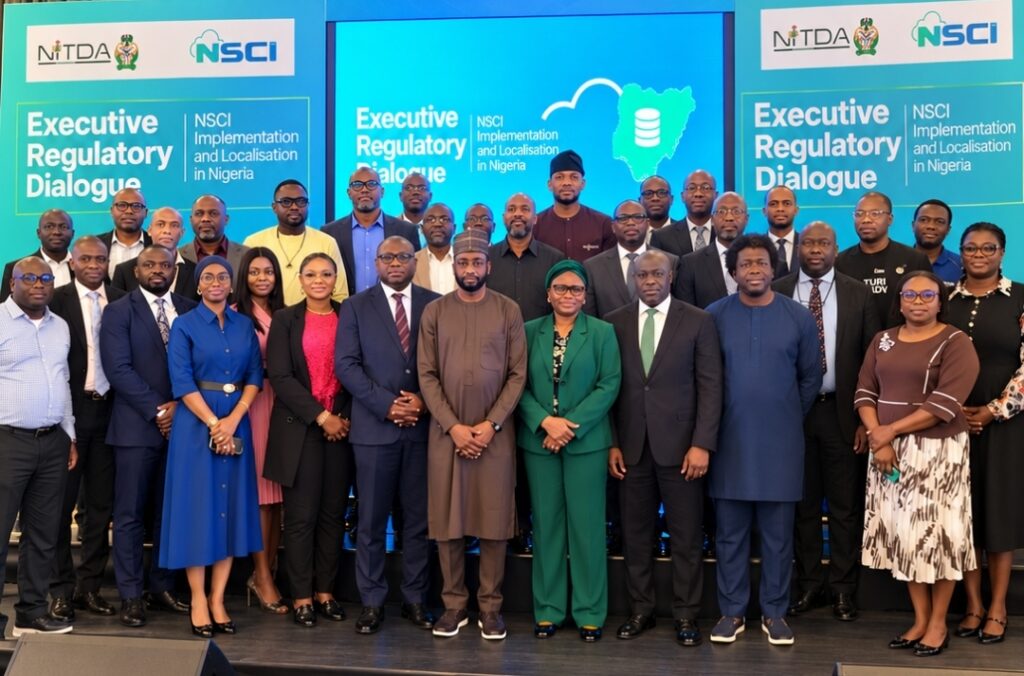
The findings were disclosed at the Executive Regulatory Dialogue on National Sovereign Cloud Initiative (NSCI) Implementation and Data Localisation, jointly organised by NITDA and the CBN in Lagos.
The dialogue brought together financial regulators, banking executives, fintech operators and technology providers to address implementation challenges ahead of the January 1, 2027 compliance deadline.
Presenting the survey findings, the Special Assistant on Digital Transformation to the NITDA Director-General, Dr Muhammad Aminu Lawal, revealed that 15 institutions expressed uncertainty about meeting the deadline, while three could not assess their readiness.
According to him, although 70 per cent of respondents had identified affected data and systems, only 25 per cent had secured executive approval and implementation budgets, while 18 per cent had commenced data migration.
The findings were based on institutions’ self-reported assessments rather than a formal compliance audit.
Speaking at the event, the CBN Deputy Governor responsible for Financial System Stability, Lamido Abubakar Yuguda, emphasised that data localisation must be accompanied by strong cybersecurity measures and operational resilience.
“Localisation alone does not guarantee security,” he warned.
Yuguda urged financial institutions to strengthen cybersecurity frameworks, disaster recovery systems and risk management procedures, stressing that critical payment transaction data must be stored and managed within Nigeria in line with applicable requirements by January 1, 2027.
Also speaking, the Director-General of NITDA, Kashifu Inuwa Abdullahi, described digital sovereignty as essential to Nigeria’s economic security and technological development.
He warned that excessive dependence on foreign digital infrastructure could expose critical services to disruptions arising from international connectivity failures and geopolitical developments.
Abdullahi explained that the National Sovereign Cloud Initiative seeks to strengthen domestic digital infrastructure while encouraging collaboration with international technology companies.
He also disclosed that 326 federal ministries, departments and agencies spent over ₦3.8 trillion on information technology between June 2023 and October 2026, stressing the need for better coordination of government technology expenditure.
Meanwhile, the Director of the CBN’s Payments System Supervision Department, Dr Rakiya Opemi Yusuf, said the apex bank would prioritise regulatory engagement and guidance while addressing deliberate non-compliance.
The regulators maintained that data localisation would improve oversight, strengthen the protection of critical financial information and create opportunities for domestic cloud infrastructure providers.
However, concerns remain over implementation costs, infrastructure readiness and regulatory clarity as financial institutions prepare for the 2027 deadline.