NCAA Warns Funding Cuts Threaten Aviation Safety, Seeks Restoration of 65% TSC Share
By Admin, Lagos
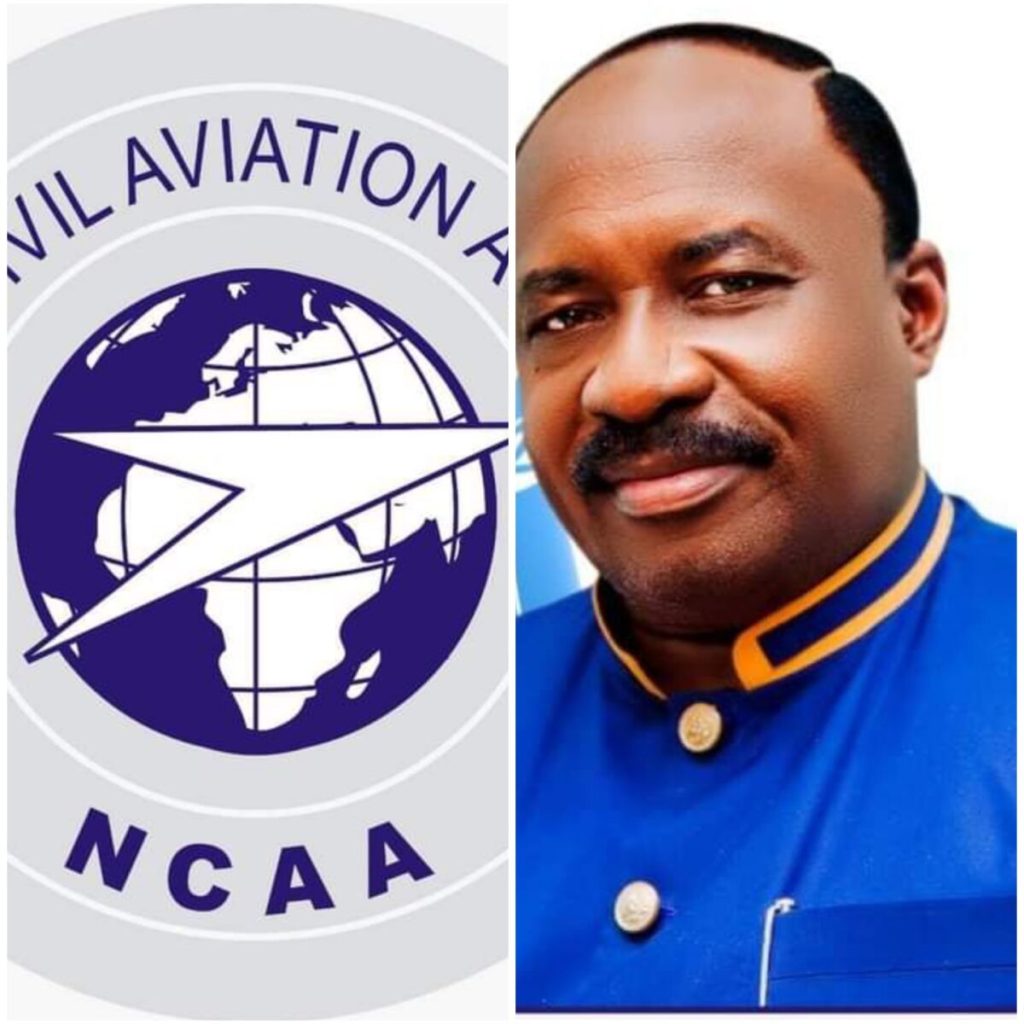
The Nigeria Civil Aviation Authority (NCAA) has appealed to the House of Representatives Committee on Aviation to restore its share of the 5 per cent Ticket Sales Charge (TSC) and Cargo Sales Charge (CSC) to 65 per cent, warning that continued reductions in its funding could weaken aviation safety oversight and accelerate the loss of skilled inspectors.
Speaking during a public hearing at the National Assembly, the Director-General of Civil Aviation, Capt. Chris Najomo, said the regulatory agency depends heavily on the TSC for its operations, noting that the charge accounts for about 83 per cent of the Authority’s total revenue.
According to him, any move to divert a larger portion of the funds to operational agencies such as the Nigerian Airspace Management Agency (NAMA) would be inconsistent with the principles of the International Civil Aviation Organization (ICAO) and could undermine Nigeria’s ability to sustain global aviation safety standards.
Capt. Najomo disclosed that although Nigeria achieved an overall score of 91.3 per cent during the recent ICAO Coordinated Validation Mission, the country’s performance in the area of financial resource adequacy for its State Safety Oversight System stood at only 50 per cent.
He explained that the funding gap has significantly affected the Authority’s ability to retain experienced technical personnel and carry out critical oversight responsibilities.
“The NCAA is increasingly losing highly trained inspectors to airlines, maintenance organisations and foreign civil aviation authorities that offer more attractive remuneration packages,” he said.
He added that inadequate funding has also slowed recurrent technical training, aircraft and aerodrome surveillance, certification activities and payment of Inspector Duty Tour Allowances, all of which are essential to maintaining aviation safety.
Najomo further noted that the Authority independently finances Nigeria’s statutory contributions to several international and regional aviation organisations, including ICAO, BAGASOO and the African Civil Aviation Commission (AFCAC), without receiving additional government funding for those obligations.
“Aircraft do not inspect themselves, and airlines cannot regulate themselves,” he told lawmakers, stressing that ICAO’s 2026–2028 Global Aviation Safety Plan identifies inadequate funding for aviation safety regulators as one of the most significant challenges facing the global industry.
Responding to proposals seeking a gre7ater share of TSC revenue for NAMA, the NCAA boss maintained that ICAO guidelines clearly distinguish between the responsibilities of an aviation regulator and those of a commercial air navigation service provider.
He argued that while the NCAA operates strictly in the public interest and cannot fully recover its costs from the organisations it regulates, NAMA already generates revenue from about 16 commercial sources, including overflight, en-route and terminal navigation charges, which reportedly contribute around 75 per cent of its income.
Najomo also pointed out that international standards require the cost of air navigation services to be recovered directly from aircraft operators rather than from passengers through ticket sales charges.
The NCAA urged lawmakers to reinstate the original funding structure introduced in 1999 by restoring the Authority’s allocation of the 5 per cent Ticket Sales Charge to 65 percent.
Capt. Najomo said that any additional funding required for NAMA’s infrastructure development should be sourced through improved utilisation of its existing revenue streams or targeted government capital support, rather than reducing the resources available to the country’s aviation safety regulator.
 2
2