
Air Peace Claims $42m Revenue Loss as Aircraft Damage Raises Safety Concerns
By Cynthia Okere, Lagos
Air Peace has raised fresh concerns over repeated damage to its aircraft by ground-handling equipment, saying the incidents have cost the airline millions of dollars in repairs and lost revenue.
The airline said three of its aircraft had suffered major damage from ground-handling operations within the past 12 months, with two of the incidents occurring in 2026.
Air Peace spokesperson, Efe Whiskey, said the financial consequences go beyond repairing damaged aircraft, as affected planes can remain out of service for extended periods, depriving the airline of revenue from scheduled flights.
According to Whiskey, the revenue lost particularly from one of the affected aircraft has reached about $42 million.
He explained that while ground-handling companies may bear the cost of repairing aircraft damaged by their equipment, the airline carries the wider commercial losses arising from the period the aircraft remains grounded.
The airline also put the repair cost of its latest damaged aircraft at about $3.8 million, while it said $3.2 million had already been paid for repairs to another aircraft damaged on Boxing Day in December 2025.
Lagos Ground Collision Disrupted Air Peace Operations
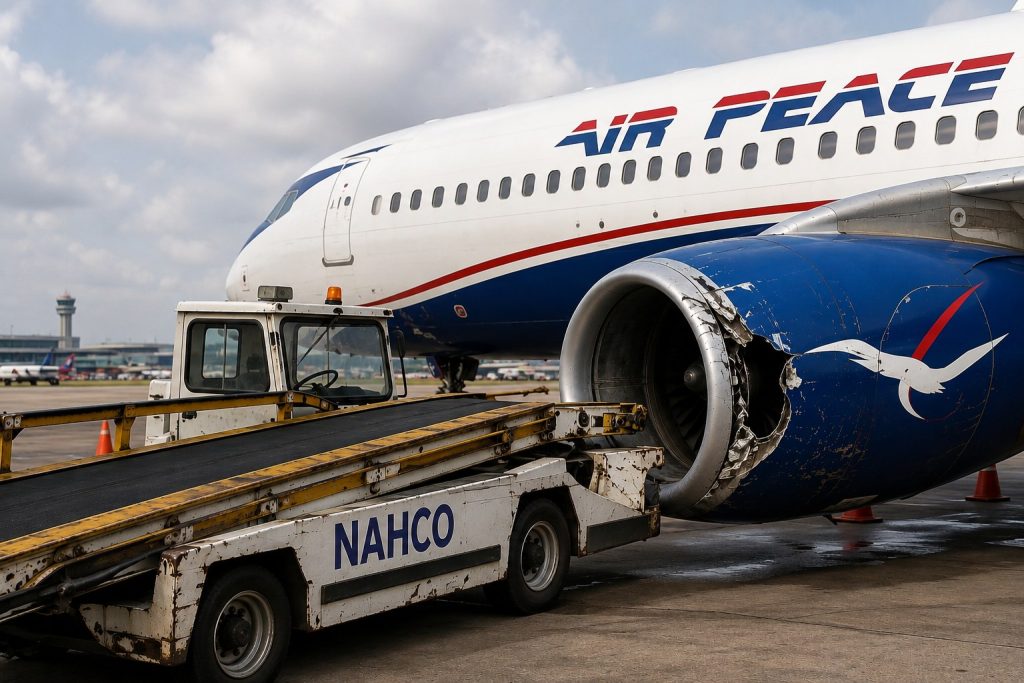
The latest concerns follow a July 2026 incident at the Murtala Muhammed Airport Terminal 1 in Lagos involving an Air Peace Airbus A320.
Air Peace said a baggage conveyor belt vehicle operated by the Nigerian Aviation Handling Company Plc, NAHCO, collided with the aircraft’s engine shortly after Flight P47427 arrived from Kano and passengers had safely disembarked.
The impact caused significant damage and rendered the aircraft unserviceable, according to the airline.
Air Peace subsequently warned passengers that the withdrawal of the aircraft from service would affect its schedule, with some flights facing delays or cancellations as the carrier adjusted its available fleet.
At the time, the airline said it was working with the ground-handling company and relevant aviation authorities to investigate the circumstances surrounding the incident and prevent a recurrence.
The incident came months after another Air Peace aircraft was damaged during ground operations at Lagos airport on December 26, 2025.
Repeated Incidents Put Ramp Safety Under Scrutiny
The latest disclosure has again drawn attention to safety during ground operations at Nigerian airports.
Ground handling is a critical part of airline operations and involves activities carried out around an aircraft before departure and after arrival, including baggage handling, aircraft towing, catering, refuelling and other ramp services.
Although such incidents take place while aircraft are on the ground, collisions involving ground-support equipment can cause substantial structural or engine damage and force aircraft out of commercial service.
The Nigerian Safety Investigation Bureau has previously investigated ground collisions involving handling equipment.
In a final report on a November 2021 collision involving a SAHCO lavatory service truck and a parked Max Air Boeing 737-300 at the Nnamdi Azikiwe International Airport, Abuja, the NSIB identified deficiencies including inadequate ramp supervision and coordination, inadequate workforce and non-compliance with sections of the handling company’s operational manuals.
The Bureau consequently issued safety recommendations aimed at strengthening compliance with ground-operation procedures.
For Nigerian airlines, aircraft downtime also carries an additional financial burden because major maintenance and specialist repairs may require overseas technical support and foreign-currency expenditure.
Air Peace’s latest claims therefore raise wider questions for regulators and airport operators over ramp supervision, ground-support equipment standards, personnel training and enforcement of safety procedures around aircraft.
The airline maintains that preventing repeated ground collisions is important not only for protecting expensive aircraft but also for limiting flight disruptions and the resulting inconvenience to passengers.