
Trump Renews Push to Restrict Birthright Citizenship in US
By Admin, Lagos
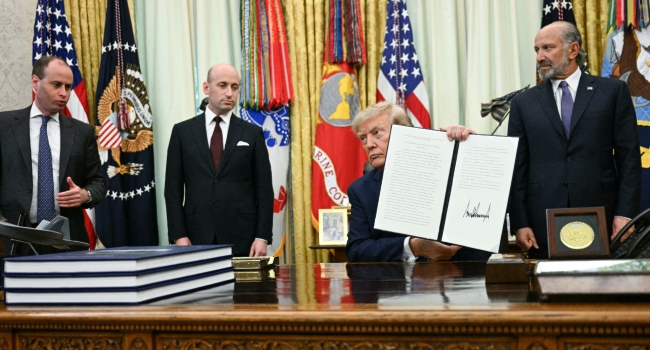
US President Donald Trump has renewed his efforts to restrict birthright citizenship, signing a new executive order aimed at limiting automatic US citizenship for certain children born on American soil.
Trump signed the order on Thursday, arguing that some foreign nationals enter the United States under the pretext of tourism but allegedly do so with the intention of giving birth to children who would automatically acquire US citizenship.
Speaking to reporters in the Oval Office, Trump criticised the current system, saying, “They’ve taken birthright citizenship, and they’ve made a joke out of it.”
The latest move comes after the US Supreme Court rejected an earlier attempt by the Trump administration to limit the constitutionally protected right.
The president described the court’s late-June ruling as “very unfortunate” and said his administration was making changes because the existing system was “very unfair.”
Trump’s senior adviser, Stephen Miller, said the new order would go beyond children born to undocumented migrants or people on temporary visas.
According to Miller, the measure would also target children of members of what he described as “foreign terrorist organizations” and people linked to “large categories of people who lobby and act on behalf of foreign governments.”
Miller said the order was intended to prevent what the administration considers inappropriate claims to birthright citizenship.
The Trump administration had issued another executive order last year seeking to prevent children born in the US to parents who were either in the country illegally or staying on temporary visas from automatically becoming American citizens.
That order, however, was blocked by lower courts.
The courts relied on the Citizenship Clause of the 14th Amendment to the US Constitution, which provides citizenship to nearly everyone born in the United States.
The amendment states: “All persons born or naturalized in the United States, and subject to the jurisdiction thereof, are citizens of the United States.”
The Supreme Court also ruled on the issue in a majority decision authored by Chief Justice John Roberts. The ruling was supported by two other conservative-leaning justices and the court’s three liberal-leaning members.
There are already limited exceptions to birthright citizenship under US law. For example, children of foreign diplomats are generally not covered because their parents are not considered subject to US jurisdiction.
US visa rules also permit authorities to deny visas where a consular officer determines that an applicant’s primary purpose for travelling to the country is to give birth.
The Trump administration has argued that the 14th Amendment was originally enacted in the aftermath of the 1861–1865 Civil War to establish citizenship rights for formerly enslaved people and should not extend automatic citizenship to children of undocumented migrants or temporary visitors.
Trump’s broader immigration agenda has also included plans to deport millions of undocumented migrants and withdraw deportation protections from nationals of several countries.
The latest executive order is therefore expected to face renewed legal challenges as the administration continues its efforts to reshape US immigration and citizenship policy.